
Assurance & Risk · Service 12
ESG Risk, Resilience & Business Continuity
ESG and climate risks integrated into enterprise risk and continuity. ESG and climate risks belong in the same register as financial and operational risks. We build the methodology, integrate ESG risks into enterprise risk management and connect them to business continuity planning.
- 5core capabilities
- 5phase delivery approach
- 3key deliverables
- 3standards & frameworks
Overview
What is business continuity management?
Business continuity management is the capability to keep delivering products and services at acceptable levels during a disruption. ISO 22301 sets requirements for a business continuity management system, including business impact analysis, recovery objectives and tested continuity plans.
Who this is for
- Companies adding ESG and climate risks to enterprise risk management
- Organisations implementing ISO 22301 business continuity
- Boards preparing for IFRS S1/S2 risk disclosures
Business benefits
- ESG risks assessed with the same rigor as other enterprise risks
- Clear recovery priorities for critical activities
- Board reporting on the risks that matter
- Risk management content for IFRS S1 and S2
Capabilities
What we deliver
ESG risk methodology
Scoring criteria and risk appetite for ESG and climate risks.
Risk register integration
ESG and climate risks added to the enterprise risk register with owners.
Business impact analysis
Critical activities, impacts and recovery time objectives identified.
Continuity strategy
Strategies and plans to keep critical activities running.
Board reporting
A board and management ESG risk report with trends and actions.
Implementation approach
How the engagement runs
- 01
Frame
Risk criteria, appetite and methodology agreed.
Output: ESG risk methodology - 02
Identify
ESG and climate risks identified with risk owners.
Output: Risk long list - 03
Analyse
Risks scored and a business impact analysis completed.
Output: Risk register and BIA - 04
Plan
Treatments and continuity strategies defined.
Output: Continuity plans - 05
Report
Results reported to management and the board.
Output: ESG risk report
Ready to plan your ESG Risk & Business Continuity work?
Book a free scoping session. We agree scope, inputs and timeline before any work starts.
Scope & deliverables
Full scope of work
Scope
- ESG risk methodology and scoring criteria
- Integration of ESG and climate risks into the enterprise risk register
- Business impact analysis and recovery time objective inputs
- Continuity strategy for critical activities
- Board and management ESG risk report
Key deliverables
- ESG risk methodology, scoring criteria and enterprise risk register
- Business Impact Analysis, RTO inputs and continuity strategy
- Board and management ESG risk report
Standards followed
Frameworks and methodologies applied
International guidelines for risk management, used to score, treat and monitor risks consistently.
International standard for business continuity management systems.
ISSB requirements to disclose how sustainability and climate risks are identified, assessed and managed.
Working together
What we need from you
- Current enterprise risk register and methodology
- List of critical products, services and sites
- Existing continuity or emergency plans
- Access to risk and operations leads
FAQ
Frequently asked questions
What is a business impact analysis (BIA)?
A BIA identifies critical activities and assesses the impact of disrupting them over time. It is used to set recovery time objectives (RTOs) and prioritize continuity resources.
What is ISO 31000?
ISO 31000 provides principles and guidelines for managing risk that any organization can apply. It is a guidance standard, so organizations cannot be certified to it.
How does ESG risk differ from normal enterprise risk?
It uses the same process but covers environmental, social and governance drivers, often over longer time horizons, so they are managed alongside financial and operational risks.
Do you test continuity plans?
Yes. Tabletop exercises can be included to test plans and train the teams who would use them.
Insights
Related insights
 ESG
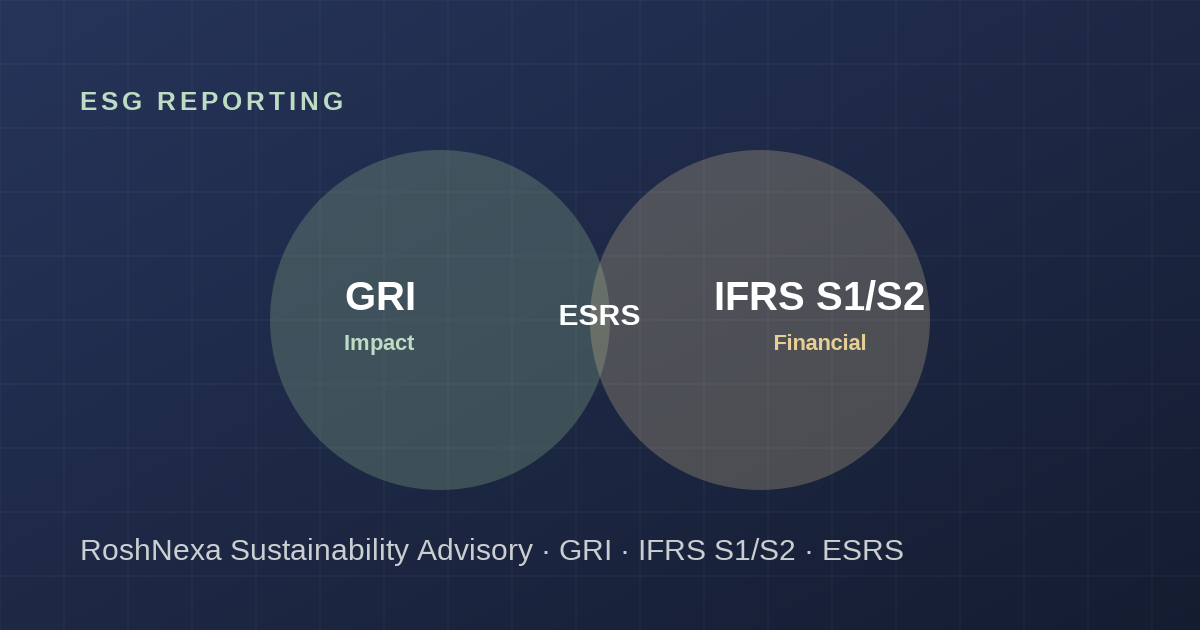
What is ESG reporting? GRI, IFRS S1 and S2, and ESRS compared
ESG reporting is how an organization discloses its environmental, social and governance performance, risks and impacts. This guide explains the main frameworks, how they differ on audience and materiality, and how to decide where to start.
 ISO Standards
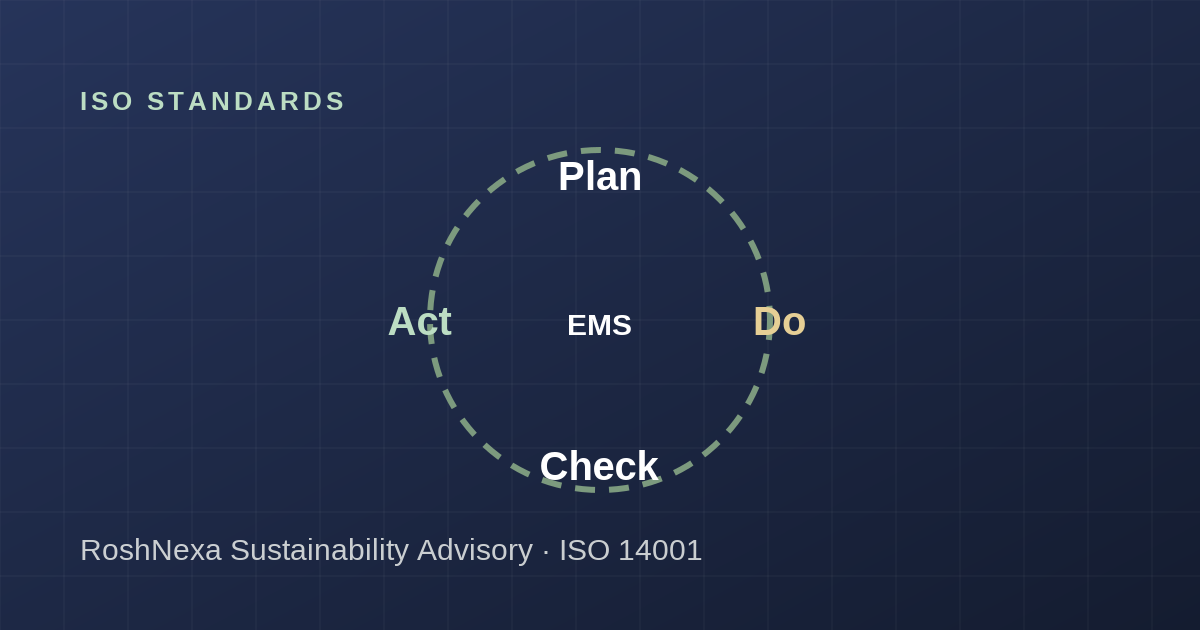
What is ISO 14001? How an environmental management system works
ISO 14001 is the international standard for environmental management systems. This guide explains what the standard requires, how the Plan-Do-Check-Act cycle works in practice and what certification involves.
Explore more
Related services
TCFD / Climate Risk & Scenario Analysis
Physical and transition exposures turned into a disclosure-ready risk view.
Learn more →11Environmental & ISO Management Systems
The system, controls and evidence needed to pass audits.
Learn more →04IFRS S1 / S2 & ISSB Reporting
Investor-grade sustainability and climate disclosures.
Learn more →Ready to take your sustainability from ambition to assurance?
The first scoping conversation is free.