
Strategy & Disclosure · Service 03
GRI Sustainability Reporting
A structured report with traceable disclosures and evidence. The GRI Standards are the most widely used framework for reporting an organization’s impacts. We take you from an applicability check to a finished report in which every disclosure is backed by data and evidence and listed in a GRI content index.
- 5core capabilities
- 5phase delivery approach
- 3key deliverables
- 3standards & frameworks
Overview
What is GRI reporting?
GRI reporting means preparing a sustainability report using the Global Reporting Initiative Standards. It applies the Universal Standards (GRI 1, 2 and 3) for reporting principles, organizational disclosures and material topics, plus the Topic Standards that apply to each material topic, and includes a GRI content index.
Who this is for
- Organisations publishing their first sustainability report
- Companies moving from a narrative report to a GRI-referenced or in-accordance report
- Suppliers asked by clients for GRI-aligned disclosures
Business benefits
- A report structure recognized by clients, lenders and rating agencies
- Traceability from each disclosure to its data and evidence
- A reusable data workbook for the next reporting cycle
- Better readiness for external assurance
Capabilities
What we deliver
Applicability and gap review
GRI 1, 2, 3 and the relevant Topic Standards checked against what you can disclose today.
GRI 3 materiality
A materiality process aligned with GRI 3, documented for the report and for assurance.
Data and evidence system
A data request workbook and evidence matrix so every number traces back to a source.
Disclosure drafting
GRI 2, GRI 3 and Topic Standard disclosures written in a clear, consistent voice.
Content index and mapping
GRI content index with SDG and UNGC mapping, plus optional SASB metrics.
Implementation approach
How the engagement runs
- 01
Scope
Reporting period, boundary and GRI reporting option agreed.
Output: Reporting plan - 02
Materiality
Material topics confirmed under GRI 3.
Output: Material topics list - 03
Collect
Data and evidence gathered through the request workbook, with follow-ups.
Output: Validated data set - 04
Draft
Report sections and disclosures drafted and reviewed with owners.
Output: Report draft - 05
Finalise
Content index, mapping and assurance-ready evidence file completed.
Output: Final report and GRI index
Ready to plan your GRI Reporting work?
Book a free scoping session. We agree scope, inputs and timeline before any work starts.
Scope & deliverables
Full scope of work
Scope
- Applicability and disclosure gap assessment against GRI 1, 2 and 3 and the relevant Topic Standards
- Materiality process aligned with GRI 3
- Data request workbook and evidence collection matrix
- Drafting of GRI 2, GRI 3 and Topic Standard disclosures
- GRI content index, SDG and UNGC mapping, and optional SASB metrics
Key deliverables
- GRI applicability and disclosure gap assessment
- Data request workbook and evidence collection matrix
- GRI 2, 3 and Topic Standard drafting with Content Index
Standards followed
Frameworks and methodologies applied
Universal (GRI 1, 2, 3) and Topic Standards used to prepare a sustainability report 'in accordance with' or 'with reference to' GRI.
Mapping of report content to the UN SDGs and the ten UN Global Compact principles.
Industry-specific metrics that can be added alongside a GRI report for investor audiences.
Working together
What we need from you
- Previous reports and corporate information
- Named data owners for environment, HR, safety and governance
- Operational and financial data for the reporting period
- Brand guidelines if the report will be designed
Experience
Delivered in practice
CDP Climate Change Disclosure
CDP questionnaire responses on governance, risks and opportunities, targets and Scope 1, 2 and 3 emissions, with a scoring-gap improvement roadmap.
FAQ
Frequently asked questions
What does reporting “in accordance with” GRI mean?
It means the report meets all the requirements in GRI 1, including reporting on all disclosures in GRI 2, determining material topics with GRI 3 and publishing a GRI content index. Organizations that cannot meet every requirement can report “with reference to” the GRI Standards instead.
Is a GRI report the same as an IFRS S1 or S2 disclosure?
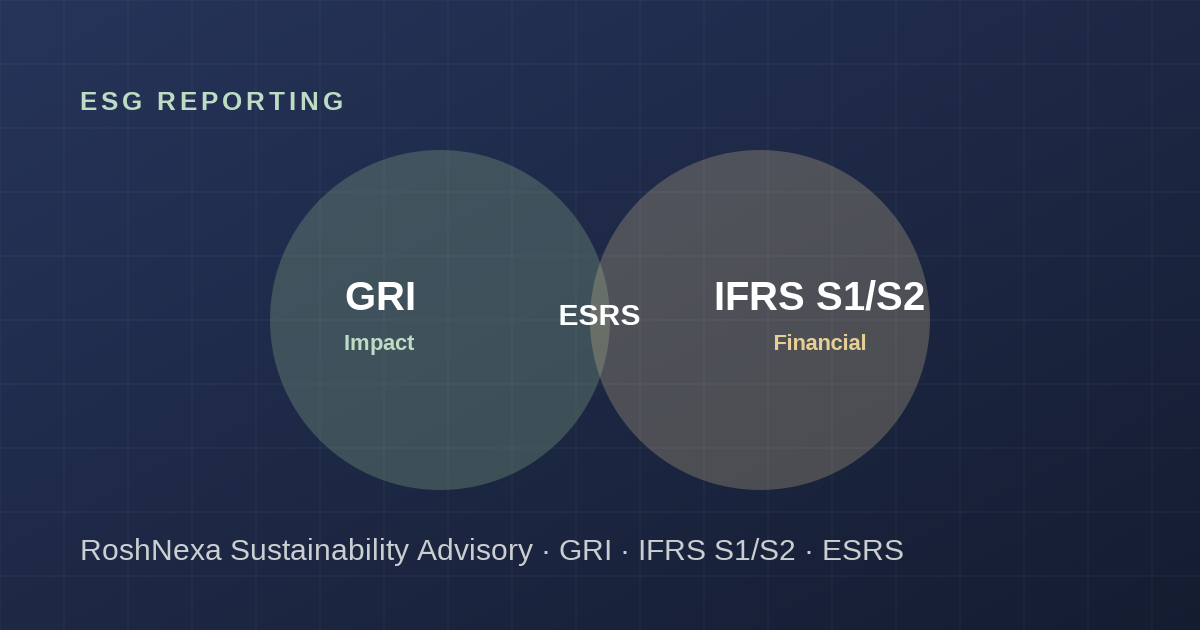
No. GRI covers an organization’s impacts on the economy, environment and people for a broad audience. IFRS S1 and S2 focus on sustainability-related risks and opportunities that affect enterprise value, for investors. Many organizations use both.
Do you design the final report?
We deliver the full written content, data tables and GRI index. Layout can be produced by your design team or arranged as part of the engagement.
Can the report be externally assured?
Yes. The evidence matrix is built so an assurance provider can trace each disclosure to its source.
Explore more
Related services
Double Materiality & Stakeholder Engagement
Identify the topics that matter by impact and by financial effect.
Learn more →04IFRS S1 / S2 & ISSB Reporting
Investor-grade sustainability and climate disclosures.
Learn more →13ESG Data Systems, Dashboards & Digital Sustainability
Reporting requirements turned into a client-owned data and monitoring system.
Learn more →Ready to take your sustainability from ambition to assurance?
The first scoping conversation is free.